Treasury's COINS proposal would bar U.S. investment in Chinese drug developers. Pure licenses look safe; NewCos should worry about two words: "joint venture"
What happened
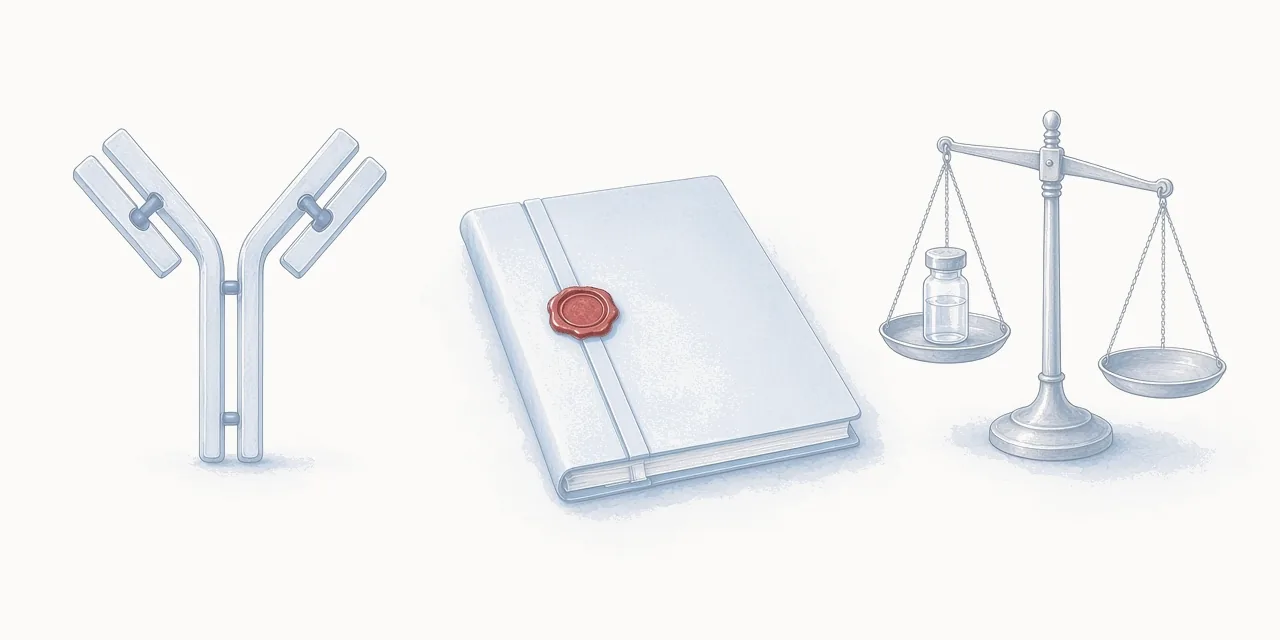
On October 22, the U.S. Treasury issued a notice of proposed rulemaking (NPRM) implementing the Comprehensive Outbound Investment National Security (COINS) Act, enacted in the FY2026 NDAA; it was published in the Federal Register on October 26 (91 FR 67396, Docket TREAS-DO-2026-0595). The statute lists five sectors (semiconductors, AI, quantum, high-performance computing, hypersonics); biotechnology was added by Treasury in the proposed rule. The draft would make it a prohibited technology (with no notification tier) to develop, engineer or use a biological system to modify, enhance, produce or control pharmaceutical compounds and their delivery systems, naming small molecules, vaccines, cell and gene therapies and monoclonal antibodies, and it also lists biomanufacturing equipment, sequencing, bioinformatics tools and laboratory automation. Covered U.S.-person transactions include acquiring equity or contingent equity, equity-like debt, entering a joint venture with a person from a country of concern, greenfield investment, directing others to do these things, and certain LP investments; written comments are due December 7, 2026 via regulations.gov or by mail. This is a proposal, not a rule in force.
Why it matters
Chinese out-licensing has been a three-way arrangement: U.S. capital, Western buyers and Chinese assets. This is the first time U.S. capital going into Chinese drug-development entities is written down as an explicit prohibition. Small molecules and antibodies are both named (Treasury itself is asking whether "pharmaceutical compounds" should be narrowed), and because biotechnology is prohibited-only, the $50,000 de minimis exception, which applies only to notifiable transactions, does not help.
The rule regulates what U.S. persons invest, not what they license or buy. But the deal structures common today meet it in very different places. Next dates: comments close December 7; law firms put the statutory deadline for the final rule around March 13, 2027; the effective date will be set in the final rule.
My view
First, a pure license sits outside the proposed rule, and that comes from the text, not from my guess. The draft's list of covered transactions has no "buying a license." Upfront plus milestones plus royalties, with no equity and no joint venture, is not a covered transaction, and Treasury's FAQ says activities outside the definition are not subject to the program unless structured to evade it. This week's Bayer–Hansoh deal for the EGFR/c-Met bispecific ADC HS-20122 ($150 million upfront, up to $3.1 billion in milestones, tiered royalties) is that structure. I would stop there. This is a reading of the current draft, not a safe harbor Treasury has named, and Treasury left the scope of "contractual arrangements" open for comment, including how contracts involving technology transfer are treated.
Second, the NewCo risk is not "does a Chinese party hold equity." It is "is there a contribution of assets plus shared profit and loss." The draft does not define joint venture; Treasury says it will use the plain-English meaning, a contribution of capital or assets by two parties and a sharing of profits and losses, with no new entity required and no geographic limit. A typical NewCo (Chinese company contributes the asset for equity, U.S. funds put in the cash) looks like that on its face. A U.S. investor who enters knowing the venture will engage in a prohibited technology is inside the joint-venture category. There is no "under 50% is safe" line. The 50% test is a separate one: if Chinese persons together hold 50% or more of a NewCo's equity, voting or board votes, or can direct it by contract, the NewCo itself becomes a covered foreign person and every later U.S. dollar into it is barred. Two questions, both to be passed: is the NewCo Chinese-controlled, and is the U.S. investor in a joint venture with a Chinese party?
Third, I think the underrated casualty is not the NewCo. The broader effect is on U.S. capital (including U.S. general partners and U.S. decision-makers at foreign funds) going into private Chinese drug developers. After the effective date, most of that would be prohibited, with no notification tier. NewCos can be restructured; a Chinese biotech that wants to keep raising U.S. venture money has far fewer options. That is my reading and the reading of several law firms, not a Treasury statement. My expectation: the license route gets more crowded, the dollar-equity route gets narrower, and Chinese companies lean harder on cash upfronts and milestones.
Fourth, the "licenses are safe" view has a tail risk, and it comes from Congress, not Treasury. H.R. 9102, the BINSA Act (Moolenaar and Dingell, referred to House Financial Services on June 2, no action since), would add "licensing a prohibited technology from a covered foreign person" to the covered transactions. Its findings name licensing agreements, joint ventures and equity investments together. It sits in committee, but I would not write "licenses are permanently safe" into any deal document.
Fifth, will the rule narrow? Treasury asked whether "pharmaceutical compounds" should be limited to "advanced or frontier" technologies, which might remove ordinary small molecules. BIO has cautioned against excessive breadth and MassBio says it will submit comments. I think the compound definition may narrow; I think the joint-venture category, which has long been part of the outbound program, is unlikely to be removed. That is a forecast, not text.
What it means for Chinese drugmakers and NewCos
Chinese drugmakers: lead with cash and royalties. Equity, warrants and milestone-for-shares need to be tested against whether the counterparty is a covered foreign person. Keep a standing diligence package ready for U.S. counsel: ownership, principal place of business, listing status, technologies. Separately, China's Announcement No. 48 on technology exports requires interim registration for certain technology exports, including licensing abroad, from October 16; it is a different regime from the U.S. rule and should not be missed. (Per law-firm summaries.)
NewCo sponsors: reduce the joint-venture indicia: cash plus royalties instead of profit sharing, final decision rights in the licensee's territory, no licensor vetoes over budget, development plan or regulatory strategy, and a clause converting equity to cash if shares cannot lawfully be issued. The rule is not retroactive, but each closing and financing tranche after the effective date is tested separately, so close what can be closed before then. Law firms are consistent on this. Use counsel, not this article.
Before December 7: if you work on U.S.–China deals, consider filing comments, directly or through an association. Comments are public. Docket TREAS-DO-2026-0595.
Platforms
TheraMab / TheraSik: antibody humanization & developability platforms (in development). Learn more: TheraMab → · TheraSik →
Sources
- Treasury press release, October 22, 2026: https://home.treasury.gov/news/press-releases/sb0667
- Federal Register NPRM, October 26, 2026 (91 FR 67396): https://www.govinfo.gov/content/pkg/FR-2026-10-26/pdf/2026-21786.pdf
- NPRM full text: https://home.treasury.gov/system/files/206/COINS-NPRM.pdf
- Treasury Fact Sheet & FAQs: https://home.treasury.gov/system/files/206/Fact-Sheet-FAQs-COINS-Act-NPRM.pdf
Based on public documents. This is the author's opinion, not investment or legal advice. The rule is in the comment stage and the final text may differ. Consult counsel for any specific transaction.
— Rocky Huang (黄菁)
AI Drug R&D Platforms

Related reading
- This week's deals: Sanofi pays $41 billion for Insmed, while upfront cash is just 4.6% of the headline in a Chinese ADC licenseWeekly deal roundup · Nov 28, 2026
- China Biopharma Out-Licensing Deal Survey (2026)Special report · Nov 2026
- Pfizer in-licenses three preclinical in vivo CAR-T programs from Starna, with $330 million upfrontLicensing · Nov 18, 2026
One email, with links to every paper. Reports and custom landscapes: contact@inlightbio.com.
Opens your email app with a pre-filled request; we add you by hand. Free, unsubscribe any time.