Observational study: mRNA-1010 recipients had larger increases in memory B cells, with germinal centres persisting to 26 weeks in 5 of 13 people
In an observational cohort of 75 healthy adults, mRNA-1010 recipients had larger increases in HA-specific memory B cells at week 4 and at weeks 17/26 than Fluarix recipients, and 5 of 13 still had detectable germinal centre responses at 26 weeks.
In an observational cohort of 75 healthy adults (38 given mRNA-1010 and 37 given Fluarix), mRNA recipients had larger increases in HA-specific memory B cells at week 4 and at weeks 17/26 (Mann–Whitney U test). In the FNA subgroup, 5 of 13 mRNA recipients (about 38%) still had detectable germinal centre responses at 26 weeks, while none were detected in the Fluarix group in either season. Ig-seq (8 people per group) showed significantly more vaccine-induced clonotypes in the mRNA group at week 4, with roughly 3 times the proportion of pre-existing clonotypes undergoing CDRH3 expansion compared with the Fluarix group. Antibody repertoires showed more newly arising H3 clonotypes in the mRNA group.
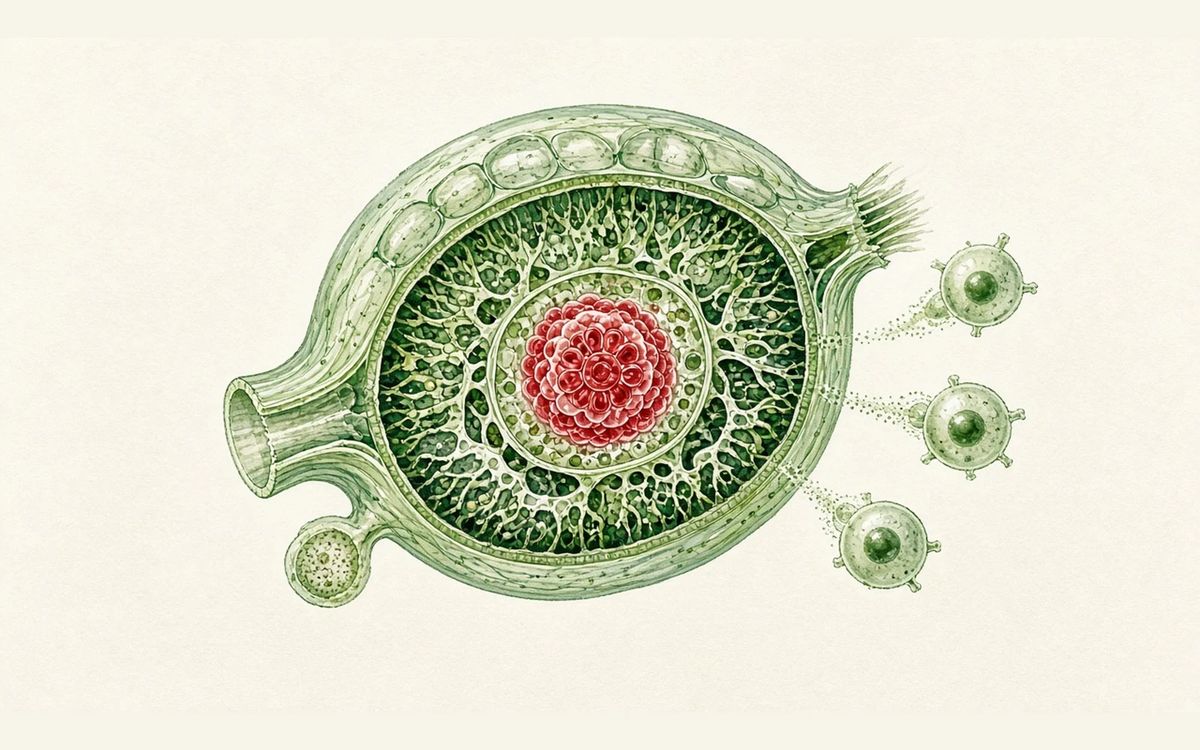
Key data card
- Study type: Observational cohort study (WU397, human, non-randomized allocation)
- Sample size n: 75 healthy adults: 38 given mRNA-1010 and 37 given Fluarix; FNA subgroup of 13 versus 15; Ig-seq in 16 people (8 per group)
- Controls: The quadrivalent split-virion vaccine Fluarix (a non-randomized parallel cohort)
- Intervention/dose: The quadrivalent seasonal influenza mRNA vaccine mRNA-1010 (provided by Moderna); the 2022–2023 and 2023–2024 Northern Hemisphere influenza seasons
- Follow-up: To 26 weeks after vaccination (blood samples at weeks 1, 2, 4, 8, 17 and 26)
- Primary endpoint: No protocol-specified primary endpoint; the central readouts are persistence of HA-specific GC responses (by FNA) and the increase in HA-specific memory B cells relative to baseline
- Primary endpoint result: HA-specific GC responses still detectable at 26 weeks in 5/13 (about 38%) of the mRNA-1010 group and in none of the Fluarix group in either season (no statistical test reported); increases in memory B cells were significantly greater in the mRNA-1010 group at week 4 and at weeks 17/26 (two-sided Mann–Whitney U test)
- Statistics: Two-sided Mann–Whitney U tests; linear mixed-effects models (donor as random effect); BASELINe test; Spearman correlation; two-stage step-up FDR correction (q<0.05)
- Evidence level: Full text
- Verification record: Europe PMC fullTextXML PMC13414572: read the abstract, introduction, all Results subsections, Discussion, Methods and all figure legends
- Vaccination with mRNA-1010 or Fluarix, with blood sampling and lymph node FNA
- Plasmablasts peaked at week 1; memory B cell increases were larger at week 4
- GC B cells persisted to week 26 in 5 of 13 people
- Serum IgG showed more vaccine-induced clonotypes and expansion of pre-existing clonotypes
- Larger increases in binding to 9 A/H1 and 12 A/H3 strains
Background and open questions
Seasonal influenza viruses drift antigenically, so vaccines must be updated each year; prior exposure can also reduce the effectiveness of recall responses against circulating strains through antigenic imprinting. Germinal centres (GCs) promote selection of high-affinity B cell clones and generate plasma cells and memory B cells, and are therefore seen as a target for improving vaccine breadth and durability.
Earlier mouse and COVID-19 studies showed that mRNA vaccines can induce strong GC responses; but influenza vaccines elicit secondary recall responses, and it has been unclear whether mRNA influenza vaccines produce stronger GC responses in humans and how persistent GCs reshape the secreted IgG repertoire. This study samples GCs directly by ultrasound-guided lymph node fine-needle aspiration and combines this with serum IgG proteomics (Ig-seq) to answer the question.
Study design
WU397 is an observational cohort study, non-randomized and unblinded, with no prespecified sample size and no power design for between-group comparison. Across the 2022–2024 Northern Hemisphere influenza seasons it enrolled 75 healthy adults aged 20–50: 38 received mRNA-1010 and 37 received the quadrivalent split vaccine Fluarix, whose HA strains differ slightly. Blood was collected to 26 weeks after vaccination; 13 people in the mRNA-1010 group and 15 in the Fluarix group additionally underwent ultrasound-guided lymph node fine-needle aspiration (FNA).
Ig-seq covered 16 people from the 2022–2023 season (8 each for mRNA-1010 and Fluarix), analysing affinity-purified A/H3 (A/Darwin/9/2021)-specific serum IgG at weeks 0, 4 and 17/26; clonotypes already present at week 0 were recorded as "pre-existing" and those not detected then as "vaccine-induced". There was no protocol-specified primary endpoint, the central readouts being GC persistence, memory B cell increases and changes in serum clonotypes, with between-group comparisons by two-sided Mann–Whitney U tests and similar methods.
Key results
Peripheral antibodies and memory B cells
ELISpot in the 2022–2023 season showed HA-specific plasmablasts peaking 1 week after vaccination; frequencies of A/H1- and A/H3-specific IgG+ and IgA+ plasmablasts were significantly higher in the mRNA-1010 group than in the Fluarix group, while IgM+ cells were higher with Fluarix, with no significant difference for influenza B. Across the 2022–2024 seasons, increases in plasma IgG titres against A/H1 and A/H3 were significantly greater in the mRNA-1010 group at week 4 and were maintained to the final time point; increases in HA-specific memory B cells were significantly greater at week 4 and at weeks 17/26. Increases in HAI titres did not differ significantly between groups at week 4 or at weeks 17/26.
Germinal centre persistence and somatic mutation
FNA sampling showed that, across both influenza seasons, only mRNA-1010 recipients, 5 of 13 (about 38%), still had detectable HA-specific GC responses 26 weeks (about 6 months) after vaccination, with no persistent GCs in the Fluarix group in either season. Three mRNA-1010 recipients contributed 21 clonally related pairs of week-1 plasmablasts and week-26 GC B cells, with the latter showing significantly higher IGHV and IGLV mutation frequencies, although BLI and ELISA showed no significant increase in affinity.
Serum clonotypes and intraclonal expansion
Ig-seq detected 67–186 A/H3-specific serum IgG clonotypes per person; pre-existing clonotypes made up 83.9% in the mRNA-1010 group and 86.2% in the Fluarix group at week 4. The mRNA-1010 group had significantly more vaccine-induced clonotypes at week 4 with comparable numbers of pre-existing clonotypes, and this difference weakened to slightly higher by weeks 17/26. The proportion of pre-existing clonotypes undergoing intraclonal CDRH3 expansion (more unique CDRH3 peptides at week 4 than week 0) averaged roughly 3 times higher in the mRNA-1010 group, and their share of serum was also higher and persisted to weeks 17/26.
Binding breadth and correlation with titres
In the 2022–2023 season cohort (mRNA-1010 n=14, Fluarix n=15), bead-based assays showed significantly greater week-4 increases in plasma binding to 9 A/H1 and 12 A/H3 strains in the mRNA-1010 group (FDR-corrected q<0.05); at week 26 (with some week-17 samples) A/H1 was no longer significant while A/H3 remained so. The proportion of newly arising CDRH3 peptide variants seen by Ig-seq correlated positively with the change in anti-A/H3 titres at week 4 (Spearman ρ=0.694).
Neutralization breadth
In microneutralization assays against homologous (A/Darwin/9/2021) and heterologous (A/Thailand/8/2022) A/H3N2, neutralizing titres rose in both groups, but the increases did not differ significantly between groups. In sequencing-based neutralization assays, the mRNA-1010 group had significantly greater week-4 increases against 11 of 13 A/H1N1 strains; against 83 A/H3N2 strains, increases were higher for most strains but did not reach statistical significance.
Mechanistic interpretation
Demonstrated in the paper: Flow cytometry and single-cell sequencing directly show that GC responses in the mRNA-1010 group can persist to 26 weeks, with both IgG+ and IgA+ cells detectable among HA-specific GC B cells, whereas the Fluarix group was predominantly IgG+. The median proportion of HA-specific GC B cell clones overlapping with week-1 plasmablasts was 87% in the mRNA-1010 group, while in the Fluarix group only 1 person showed overlap (20%).
Lineage tree analysis identified 3 A/H3 serum IgG clonotypes that were clonally related to GC B cells and showed expanded CDRH3 diversity, all from the mRNA-1010 group and none from Fluarix; GC B cell sequences (weeks 8–26) sat in subbranches corresponding to post-vaccination CDRH3 peptide variants. The proportion of newly arising CDRH3 peptide variants correlated positively with the change in titres at week 4 (ρ=0.694), which is correlative evidence.
Author hypotheses: The authors speculate that mRNA-1010 may deliver more antigen to draining lymph nodes and prolong antigen persistence, and may activate low-frequency memory B cells through the self-adjuvant effect of lipid nanoparticles, the higher valency of membrane-bound antigen and human cellular glycosylation patterns; repeated rounds of mutation in persistent GCs may provide "anticipatory mutations" for clonal diversification and binding breadth, and whether repeated vaccination broadens the memory repertoire remains speculative.
Limitations and uncertainties
- The study is observational and non-randomized, with no prespecified sample size, limited to healthy adults aged 20–50, and the two vaccines contain slightly different HA strains, so platform effects and strain differences cannot be separated; all between-group differences should be read as associations.
- The FNA subgroup comprised only 13 people in the mRNA-1010 group and 15 in the Fluarix group, GC persistence was a count comparison of 5/13 versus 0, and the paper reports no statistical test for it; follow-up extends to 26 weeks with no protective efficacy or clinical endpoint data.
- Single-cell and lineage analyses are very small in scale: scRNA-seq covered 4 mRNA-1010 and 3 Fluarix recipients, the 21 clonally related pairs came from 3 people, and only 3 serum clonotypes met the lineage criteria; Ig-seq covered only A/H3 in 8 people per group.
- Functional evidence is limited: there were no significant between-group differences in HAI or A/H3N2 microneutralization, and increases in neutralization across the 83 A/H3N2 strains did not reach significance, which the authors attribute to limited sample size; the cause of persistent GCs (which the authors say remains unexplained) and any causal link to breadth were not directly tested.
Clinical and industry implications
If these associations are reproduced in larger, randomized studies, mRNA influenza vaccines such as mRNA-1010 may broaden the binding repertoire of serum IgG by prolonging GC activity, which aligns with the broad binding sought for a universal influenza vaccine.
Current evidence is limited to immunological readouts: neither HAI nor A/H3N2 microneutralization differed between groups, so clinical protection cannot be inferred from this. FNA combined with Ig-seq offers a methodological framework for comparing the effects of vaccine platforms on GC persistence and the serum IgG repertoire; because the two vaccines contain different HA strains, comparative conclusions should be interpreted with caution.
Authors, source and verification
Evidence level: Full text; verification record: Europe PMC fullTextXML PMC13414572: read the abstract, introduction, all Results subsections, Discussion, Methods and all figure legends
Matz HC, Yu TG, Dixit K, Kikawa C, Zhou JQ, Pena Alzua G, et al. mRNA-based influenza vaccine expands the B cell response breadth in humans. Nat Immunol. 2026. https://doi.org/10.1038/s41590-026-02569-5
Primary field: Vaccines & infection immunology · Related: Antibody engineering, Nucleic acid and gene therapy, mRNA influenza vaccines, Germinal centres, Lymph node fine-needle aspiration, Serum IgG proteomics (Ig-seq)
Summary of a published paper or preprint, written from the original text; numbers are as reported by the authors. Not medical or investment advice. Corrections: contact@
Related science
Triple therapy at 72 hours: 8 infant macaques aviraemic for 6 months off treatment
Virus particles and three drug chains, with red marking suppressed virus
44% of rhesus macaques developed serum bnAb activity after the complete sequential HIV vaccine regimen
Three generations of B cells maturing step by step, with antibodies binding the viral spike at right
A fungal glycan adjuvant extends COVID-19 mRNA vaccine protection to day 500
Lipid particles with mannan chains, a dendritic cell and a B cell producing antibodies
One email, with links to every paper. Reports and custom landscapes: contact@inlightbio.com.