Personalized neoantigen vaccine in ovarian cancer, phase 1: feasible, with escape pointing to antigen presentation
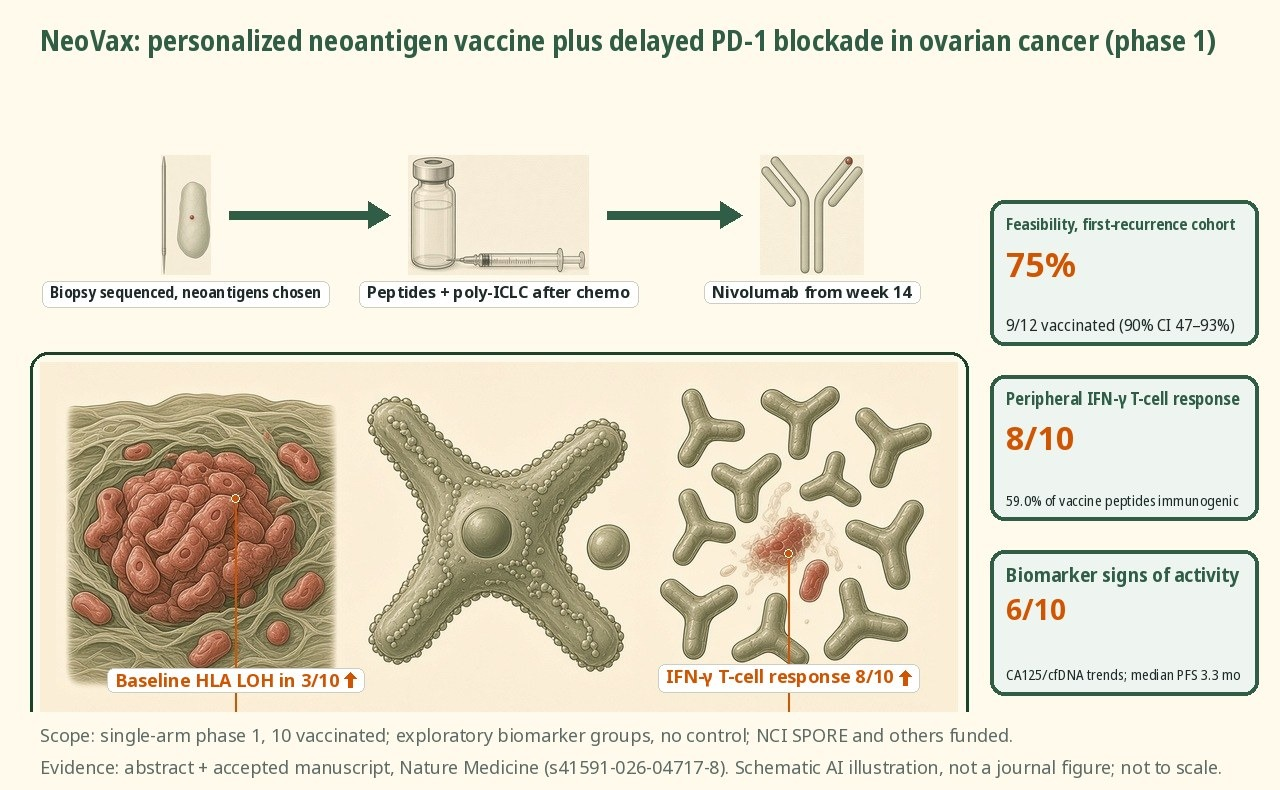
In the single-arm phase 1 NeoVax trial in platinum-sensitive high-grade epithelial ovarian cancer, patients received a synthetic long-peptide vaccine built from their own tumor mutations (with poly-ICLC) after standard platinum chemotherapy, adding nivolumab from week 14. In the first-relapse cohort, 9 of 12 evaluable patients (75%) were vaccinated, versus 1 of 9 (11%) in the newly diagnosed cohort; there were no unexpected safety signals and no discontinuations for toxicity. Eight of 10 vaccinated patients developed vaccine-peptide-specific IFN-γ T-cell responses, and 6 showed CA125/cfDNA dynamics suggesting biological activity; progression was associated with antigen-presentation defects including HLA loss of heterozygosity, a JAK1 structural variant and loss of vaccine-targeted mutations.
Background and open questions
High-grade epithelial ovarian cancer has gained little from immune checkpoint inhibitors, and a frequently cited reason is its low tumor mutational burden and weak T-cell priming. Personalized neoantigen vaccines have shown randomized-trial signals in high-mutation tumors such as melanoma, and small trials have suggested activity in lower-mutation cancers including pancreatic cancer, glioblastoma and kidney cancer.
This study asked whether a personalized neoantigen vaccine can be built into standard ovarian cancer care feasibly and safely, how vaccine-induced immunity relates to the clinical course, and by which mechanisms tumors escape.
Study design
Patients with platinum-sensitive high-grade epithelial ovarian cancer were enrolled in two cohorts: newly diagnosed (cohort A, stage IIIC/IV, interval debulking after three cycles of chemotherapy) and first platinum-sensitive relapse (cohort B). All had a diagnostic biopsy before standard chemotherapy for whole-exome and RNA sequencing, prediction of neoepitopes binding the patient's HLA, and vaccine manufacture.
Vaccinated patients' tumors carried a median of 103 missense mutations (range 51–150), a median tumor mutational burden of 2.8, and a median of 86.5 mutations encoding predicted HLA-binding neoepitopes. NeoVax was given after standard chemotherapy, with nivolumab added from week 14. The median interval from the vaccine-design biopsy to first vaccination was 6.5 months (range 6.0–7.6).
Key results
Feasibility and safety
In cohort B, 9 of 12 patients (75%) were vaccinated, meeting the prespecified feasibility criterion; in cohort A only 1 of 9 (11%). Enrollment in cohort A was limited mainly by insufficient core-biopsy tissue and a changing regulatory landscape for first-line maintenance therapy. No unexpected treatment-related adverse events occurred, and no patient stopped treatment for toxicity.
Do vaccine targets survive chemotherapy?
Personalized cfDNA assays tracked the vaccine-targeted single-nucleotide mutations: in 7 of 10 patients more than half of the targets were detectable at priming, and in an eighth before the final boost. Overall, 56.5% (at priming) and 73.1% (by the final boost) of targets were detectable, indicating that most vaccine targets remained tumor-relevant after roughly six months of chemotherapy.
Biomarker groups and immune responses
Median progression-free survival from vaccination was 3.3 months (range 1 month to not reached), with wide individual variation. Based on serum CA125 and cfDNA dynamics, the investigators grouped the 10 patients as progressors (4), transient controllers (3) and prolonged controllers (3). The three prolonged controllers were already in complete (2) or partial (1) response after standard chemotherapy before vaccination; their CA125 stayed low while cfDNA fluctuated. In one, cfDNA peaked at day 140, then fell below the limit of detection, and the patient remained disease-free at data cutoff (day 650).
Eight of 10 patients developed ex vivo IFN-γ responses to at least one vaccine peptide pool, mostly peaking after the week-12 boost; 85 of 144 vaccine peptides (59.0%) were immunogenic, a median of 7 immunogenic peptides covering 7 mutations per patient. The 6 transient or prolonged controllers had vaccine responses covering more target mutations than the 4 progressors (mean 9.3 vs 5.5, P = 0.029).
Immune escape
A post-vaccination tumor from one progressor carried a JAK1 structural variant; in patient-derived organoids it impaired STAT1 phosphorylation and HLA class I expression, which was restored by JAK1 complementation. Three of 10 vaccinated patients had loss of heterozygosity of the HLA region on chromosome 6 at baseline (including 2 of the 4 progressors), two of them losing a whole haplotype spanning HLA-A, -B and -C, so some of the best-predicted epitopes lost their presenting molecules. Relapse biopsies from two transient controllers had lost 3 of 15 and 6 of 14 vaccine-targeted mutations, consistent with immunoediting.
Clinical and industry implications
For the personalized cancer vaccine field, the study's value lies largely in explaining why responses fall short. In low-mutation ovarian cancer the pool of usable neoantigens is small to begin with, and about 31% of tumors show allele-specific HLA loss, so some top-ranked targets can never be presented. The authors argue for incorporating HLA loss of heterozygosity and antigen-presentation status into antigen selection; in a Q&A published in the ACIR weekly digest, the first author also pointed to non-canonical neoantigen sources such as structural variants and endogenous retroviruses. For developers of mRNA or peptide personalized vaccines, the results suggest that trials in low-mutation tumors should assess antigen presentation up front.
Mechanistic interpretation
What the paper shows: sequencing a personalized neoantigen vaccine after standard ovarian cancer therapy, combined with delayed PD-1 blockade, was feasible and well tolerated in first relapse; the vaccine induced polyclonal T-cell responses in most vaccinated patients; and progressing cases showed evidence of antigen-presentation-related escape.
What still needs testing: whether biomarker-defined "control" reflects real clinical benefit, the separate contributions of vaccine and nivolumab, and whether designing neoantigens around HLA loss and antigen-presentation status improves efficacy all require larger, controlled trials.
Limitations and uncertainties
- Single-arm phase 1 with only 10 vaccinated patients and heterogeneous platinum sensitivity; no firm efficacy conclusions are possible.
- Clinical groups were assigned post hoc from CA125 and cfDNA, not by standard endpoints such as RECIST objective response; overall survival was not reported.
- Vaccine and nivolumab were given together, and some patients also received standard PARP-inhibitor maintenance, so their individual effects cannot be separated.
- Enrollment in the newly diagnosed cohort was difficult; conclusions rest mainly on first-relapse patients.
- This summary is based on the journal abstract and the author accepted manuscript; individual figures in the publisher's final version may differ slightly.
Authors and source
Nature Medicine (2026). Published online 14 October 2026. https://doi.org/10.1038/s41591-026-04717-8. Author accepted manuscript: Oxford University Research Archive. ClinicalTrials.gov: NCT04024878.
Numbers are as reported by the authors. Corrections: contact@
Related science
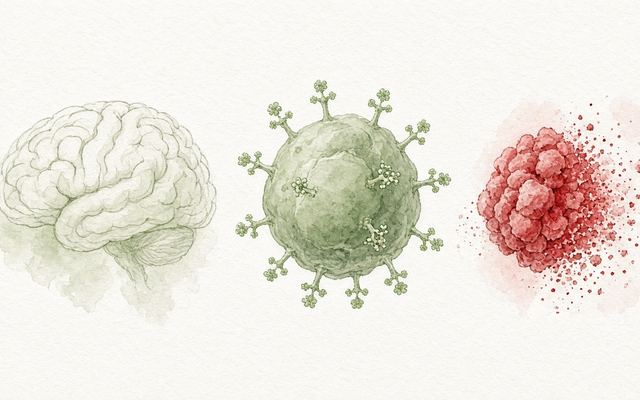
Restoring IL-15 signalling boosts innate immunity in brain metastasis
The brain starves innate lymphoid cells of IL-15; restoring it locally lets them control metastasis without T cells
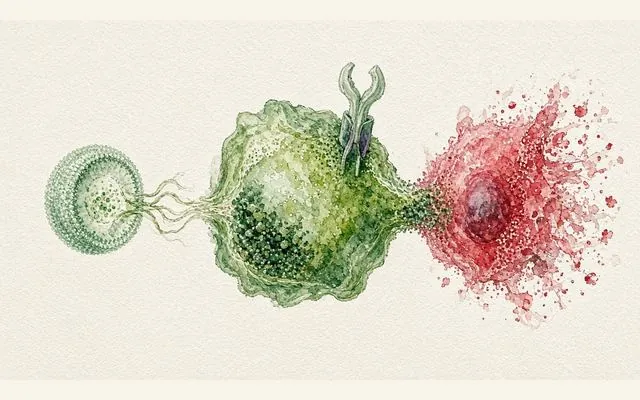
In vivo BCMA CAR-T phase 1: 15 months of follow-up, one ongoing sCR
Green CAR-T cells attacking a red myeloma cell at right
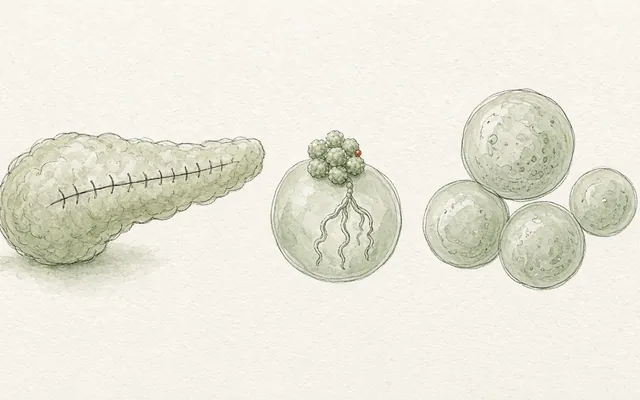
Lymph-node-targeted KRAS vaccine phase 2: DFS endpoint not met, immune signal awaits confirmation
In resected KRAS-mutant pancreatic cancer, the seven-valent amphiphile vaccine missed its disease-free survival endpoint but induced broad T-cell responses; prespecified subgroups and adjusted analyses hint at benefit
One email, with links to every paper. Reports and custom landscapes: contact@inlightbio.com.
Opens your email app with a pre-filled request; we add you by hand. Free, unsubscribe any time.