Across 12 diet models, 4/6 obesogenic diets are associated with anti-PD-1 response
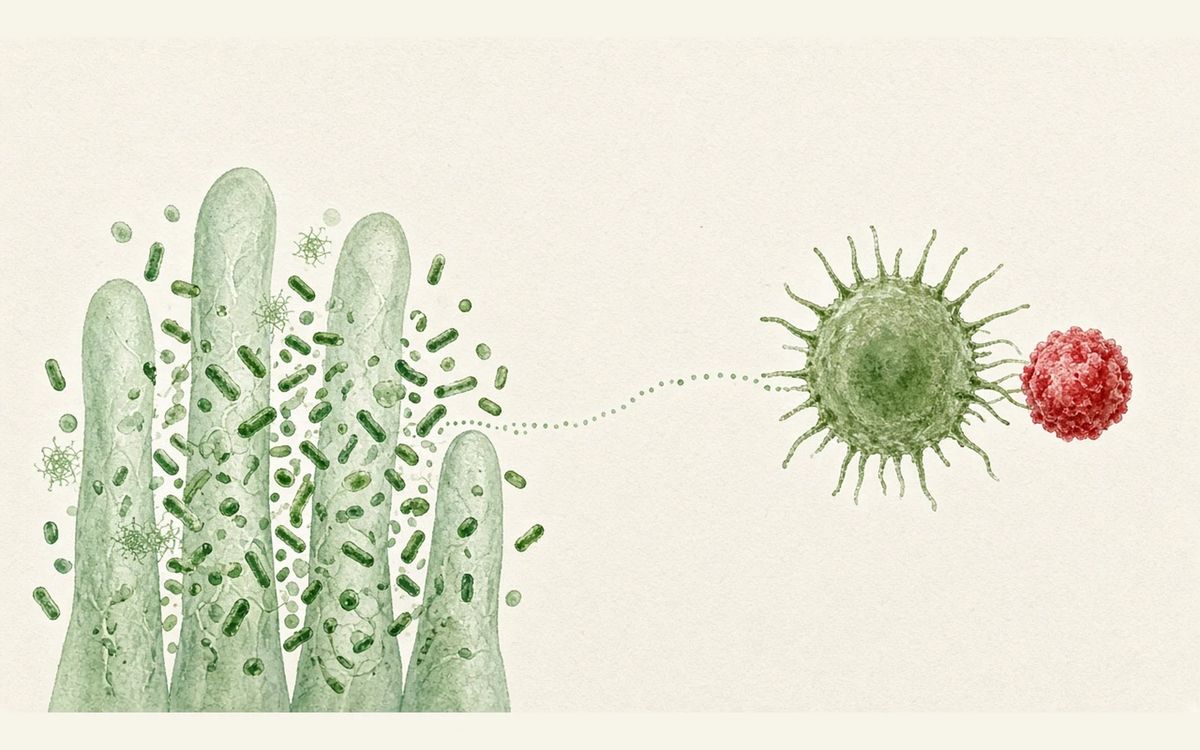
Across 12 mouse diet models, 4/6 obesogenic diets were associated with anti-PD-1 response, suggesting that what matters is not metabolic score but the diet–gut microbiome axis.
In HKP1 anti-PD-1 experiments across 12 diets, 4/6 obesogenic diets (66.7%) were associated with ICI response versus 2/6 non-obesogenic diets (33.3%). Diet exposure lasted 15 weeks, with n=14 for the Japanese diet and n=15 for the others. Microbiome analysis showed enrichment of Lactobacillaceae and Lactobacillus in responsive diets. High Fat diet combined with L. johnsonii supplementation produced complete responses in all antibiotic-treated mice. ICI score showed no significant association with body weight, fat mass or metabolic score. Supplementation with the metabolite DAT reversed Psyllium-associated resistance. Microbiome changes were detectable within 48 hours of a diet switch.
Key data card
- Study type: Preclinical mechanistic study across multiple mouse diets, combining 16S sequencing, metagenomics, metabolomics, monocolonization and human and mouse FMT
- Sample size n: 12 diets; in the 15-week model, n=14 for the Japanese diet and n=15 for the others; in the main ICI figures, n=3 for Psyllium anti-PD-1, n=4 for Ketogenic, Vegan, Pectin and Low Fat anti-PD-1, and n=5 for most groups
- Controls: IgG isotype control; Psyllium or High Fat diets, PBS gavage, and FMT from low- or high-BMI donors served as controls depending on the experiment
- Intervention/dose: In the main GCI ICI experiments, anti-PD-1 was given intraperitoneally at 10 mg kg−1 every 3 days; CRCHUM human FMT, single-strain supplementation and germ-free models used a fixed dose of 250 µg; combined with diet switching, FMT, L. johnsonii supplementation or monocolonization, and DAT supplementation in drinking water
- Follow-up: Main tumour experiments ran 16–24 days; diet exposure was 3 or 15 weeks; diet switches occurred 48 h before the first treatment
- Primary endpoint: Preclinical core readout: whether anti-PD-1 significantly reduced endpoint tumour volume relative to IgG on each diet, used to compute ICI response/sensitivity
- Primary endpoint result: 4/6 obesogenic diets (66.7%) were associated with ICI response, versus 2/6 non-obesogenic diets (33.3%); across the 12 diets, ICI score showed no significant association with body weight, fat mass, glucose tolerance, insulin, leptin or metabolic score
- Statistics: Sample sizes were set from historical data rather than power calculations; tumour growth curves used multiple two-sided Mann–Whitney tests and correlations used two-sided Spearman
- Safety: Animal experiments followed humane endpoints: early termination for tumour ulceration, total volume above 2.5 cm3, or adverse clinical signs
- Evidence level: Full text
- Verification record: Read the Europe PMC fullTextXML PMC13558080 Abstract, Results, Methods, figure legends, Discussion and Limitations
- Multiple diets shape microbial ecology
- Lactobacillus enriched in responsive diets
- L. johnsonii enriched in responsive obesogenic diets
- DAT enhances T cell effector function
- Anti-PD-1 sensitivity is restored
Background and open questions
High BMI is associated with better immune checkpoint inhibitor efficacy in patients across several cancers, but obesity also comes with abnormal glucose and lipid metabolism and an altered microbiome, so body weight alone cannot disentangle causation. The commonly used high-fat chow models are also oversimplified, typically mimicking only diets with 45–60% of kcal from lard, and cannot represent dietary diversity in human populations.
The approach Desharnais et al. take in Nature is to break the "obesity paradox" into four measurable layers: diet, host metabolism, immune state and gut microbiome. The point is not to recommend long-term obesogenic diets for patients but to ask whether short-term dietary modulation, specific strains or microbially derived metabolites can reshape the host niche for anti-PD-1.
Study design
The discovery system first established 12 mouse diet models, covering Low Fat, High Fat, Western, Mediterranean, Japanese, Vegan, American, Aspartame, Ketogenic and 3 fibre-substituted diets. Male C57BL/6J mice were fed from 4 weeks of age for 15 weeks before inoculation with HKP1 lung cancer cells, with body weight, fat mass, glucose tolerance, insulin and immune phenotype recorded.
In the main ICI experiments, anti-PD-1 or IgG was given intraperitoneally at 10 mg kg−1 every 3 days to an endpoint of 16–24 days, with the diet maintained and tumours monitored by manual calipers; "response" was defined as a significant reduction in tumour volume with anti-PD-1 relative to IgG. Three-week diets, 48 h diet switches, mouse and human FMT, germ-free monocolonization and DAT supplementation in drinking water were used to test the causal chain. Sample sizes were set from historical data rather than power calculations.
Key results
Response varies with diet
The core readout comes from HKP1 anti-PD-1 experiments across 12 diets: 4/6 obesogenic diets (66.7%) were associated with ICI response, versus 2/6 non-obesogenic diets (33.3%). This shows that the obesogenic diet category can enrich for response, but not every obesogenic diet works and not every lean diet fails.
Metabolic score does not explain it
Reverse controls showed that across the 12 diets, ICI score was not significantly associated with body weight, fat mass, glucose tolerance, insulin, leptin or metabolic score. The metabolic score threshold used a mean of 0.36 to split 6 high- and 6 low-scoring diets, but anti-PD-1 sensitivity did not simply track metabolic dysfunction.
The microbiome precedes obesity
Microbiome analysis linked responsive diets to enrichment of Lactobacillaceae and Lactobacillus, while non-responsive diets were enriched for Bacteroidaceae, Sutterellaceae and Bacteroides; this pattern was visible both before tumour inoculation and at endpoint. More importantly, microbiome composition was largely stable by 3 weeks, ahead of the continued weight gain through 15 weeks; 3-week High Fat and Psyllium models still reproduced the difference in HKP1 anti-PD-1 response.
Switching and FMT support causality
Diet switching provided bidirectional evidence: Psyllium→High Fat was sufficient to sensitize HKP1 tumours to anti-PD-1, while High Fat→Psyllium desensitized them, with increases in Lactobacillus or decreases in Bacteroides detectable within 48 h of the switch. In mouse FMT, High Fat recipients clustered with the High Fat microbiome at endpoint even when given a Psyllium donor microbiome.
Closing the loop with a strain and a metabolite
In antibiotic-treated SPF mice, High Fat diet plus L. johnsonii supplementation produced complete responses in all anti-PD-1-treated mice; PBS gavage did not. FMT from the same ICI-non-responding lung cancer donor remained insensitive on Psyllium but became sensitive on High Fat. DAT supplementation was sufficient to reverse this effect and sensitize mice to anti-PD-1. The high-BMI donor FMT arm included 6 donors with BMI ≥25 and showed a significant anti-PD-1 effect; the low-BMI arm included 3 donors with BMI <25 and showed none.
Mechanistic interpretation
Demonstrated in the paper: The paper directly shows that diet can reshape the microbiome and change anti-PD-1 outcomes: 12 diets produced distinct microbiomes with Lactobacillus enriched in responsive diets; 3 weeks of diet was enough to establish the microbial state; bidirectional switching between Psyllium and High Fat produced sensitization and desensitization respectively; and antibiotics weakened anti-PD-1 sensitivity on a High Fat background.
The paper also directly demonstrates functional roles for a strain and a metabolite. Monocolonization or supplementation with L. johnsonii on a High Fat background enhanced anti-PD-1 and produced complete responses in all SPF mice; L. johnsonii with Psyllium, or M. gordoncarteri with High Fat, conferred only partial sensitivity. DAT was linked to this axis in serum and bacterial supernatant experiments, and DAT supplementation in drinking water rescued the Psyllium-resistant model.
Author hypotheses: The authors suggest that the more conserved determinant may not be the single species L. johnsonii but the microbial ecology and aromatic amino acid metabolic function established under a given diet. The Discussion proposes that the DAT-related tyrosine-derived phenylpropionate pathway and indole-type tryptophan pathways such as ILA may be complementary or synergistic; these pathways may raise anti-PD-1 sensitivity by enhancing T cell effector function, although their specific contributions within a complex microbiome remain incompletely resolved.
Limitations and uncertainties
- First, 4/6 (66.7%) versus 2/6 (33.3%) is a proportion summarized across 12 diets; the Methods state that sample sizes were set from historical data rather than a power calculation. It is therefore best treated as a core preclinical observation and should not be written up as a formal superiority conclusion.
- Second, the study uses transplantable subcutaneous tumours as proof of concept; the authors state explicitly that spontaneous orthotopic models are needed to test how tissue-specific microenvironments interact with host microbiome and metabolic state.
- Third, the human evidence remains a donor-to-mouse bridging experiment. There were 6 high-BMI donors and 3 low-BMI donors; the few responding mice in the low-BMI group came from a single donor with a BMI of 24.95, close to the BMI ≥25 threshold, so this cannot show that changing BMI would confer benefit.
- Fourth, the mechanism has not converged on a single molecule. ILA was elevated in responsive obesogenic diets yet was undetectable in serum in the germ-free L. johnsonii monocolonization model; DAT comes closer to a functional mediator, but other species or microbial combinations may also contribute.
Clinical and industry implications
If these mouse results can be reproduced in more clinically faithful orthotopic models and in patient intervention studies, the obesity paradox could be reframed as a "diet–microbiome–metabolite" axis rather than something driven by high BMI or metabolic dysfunction alone. That would shift the intervention target from body weight itself to short-term dietary modulation, diet pairing around FMT, specific strains and microbially derived metabolites.
The translational boundary is equally clear, however: the authors do not advocate long-term obesogenic diets for patients, given their known health risks. The more feasible direction is to test short dietary windows, L. johnsonii-like strains, DAT or related phenylpropionate metabolic axes alongside anti-PD-1 therapy or FMT strategies.
Authors, source and verification
Evidence level: Full text; verification record: Read the Europe PMC fullTextXML PMC13558080 Abstract, Results, Methods, figure legends, Discussion and Limitations
Desharnais L, Swaby A, Messaoudene M, Doré S, Yu MW, Fiset B, et al. Diet–microbiome synergy underlies obesity-associated immunotherapy efficacy. Nature. 2026. https://doi.org/10.1038/s41586-026-10750-x
Primary field: Tumor immunology & cell therapy · Related: Disease models, Anti-PD-1, Gut microbiome, Dietary intervention, Lactobacillus johnsonii, Faecal microbiota transplantation
Summary of a published paper or preprint, written from the original text; numbers are as reported by the authors. Not medical or investment advice. Corrections: contact@
Related science
In vivo BCMA CAR-T phase 1: 15 months of follow-up, one ongoing sCR
Green CAR-T cells attacking a red myeloma cell at right
Synthetic TCR library: on average only 56% of VDJdb TCRs reproduce their annotated reactivity
Green peptide-MHC complexes binding synthetic TCRs, with one non-reproducing case marked in red
Targeting ZMYND8 increases effector-like exhausted T cells in mice and enhances immunotherapy responses
Green immune cells attacking red tumour cells
One email, with links to every paper. Reports and custom landscapes: contact@inlightbio.com.