First-in-class METTL1 inhibitor STM9005 cuts tRNA m7G and slows AML and solid-tumor models
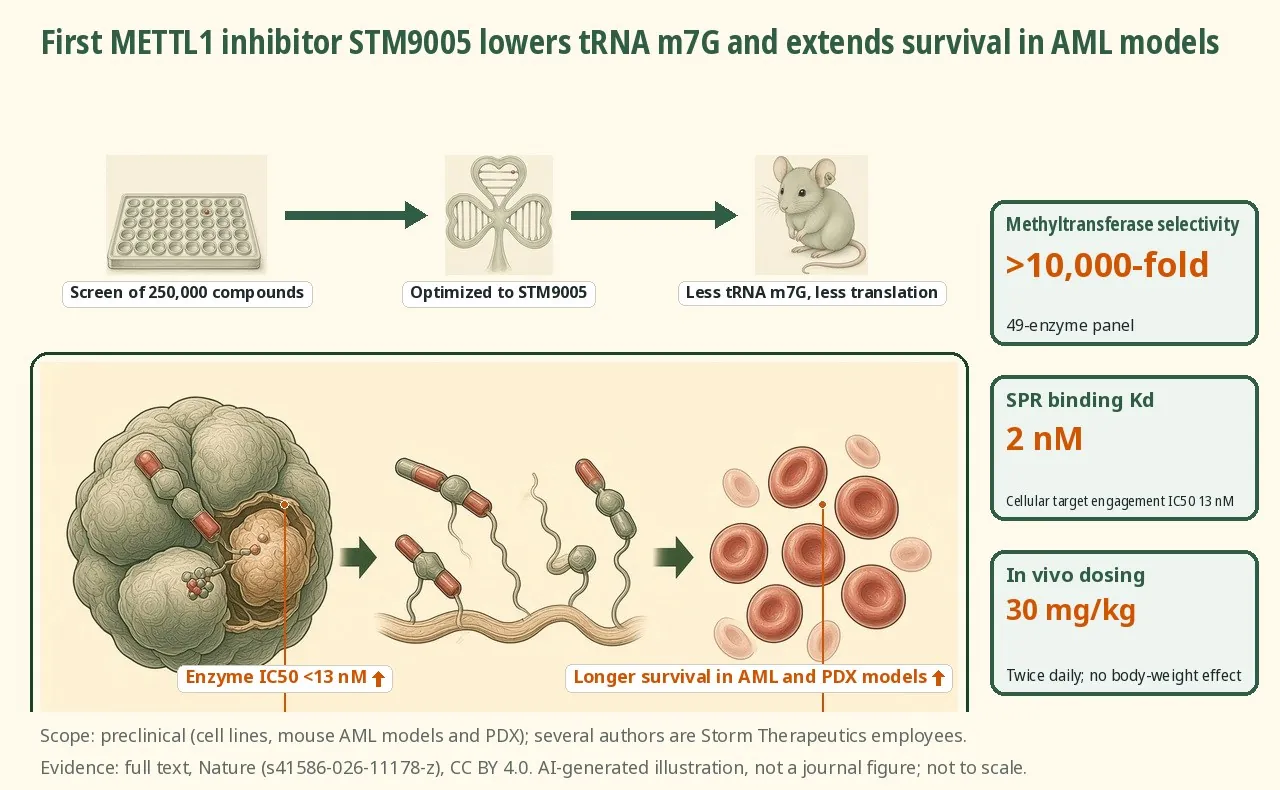
Starting from a ~250,000-compound high-throughput screen, the team optimized the hit STM4529 into STM9005, a METTL1–WDR4 inhibitor with >10,000-fold selectivity. STM9005 lowers m7G on a subset of tRNAs, reduces translation of oncogenic mRNAs such as CDK4, blocks growth of leukaemia and solid-tumor cell models, and prolongs survival in AML mouse and PDX models.
Background and open questions
METTL1, with its partner WDR4, installs N7-methylguanosine (m7G) on tRNAs. It is overexpressed in several haematological and solid malignancies, but no selective pharmacological inhibitor had been described, so it was unclear whether targeting the enzyme is tractable and tolerated.
Study design
A high-throughput screen of about 250,000 compounds produced the starting hit STM4529, which medicinal chemistry optimized into STM9005. The team profiled selectivity, tRNA modification, translation and growth in cell models, then tested efficacy in AML mouse and patient-derived xenograft (PDX) models.
Key results
- STM9005 showed greater than 10,000-fold selectivity for METTL1–WDR4 in a broad methyltransferase panel.
- Treatment reduced m7G on a subset of tRNAs and lowered translation of oncogenic transcripts including CDK4.
- STM9005 blocked growth of leukaemia, melanoma, pancreatic carcinoma, oesophageal cancer and small cell lung carcinoma cell models.
- In AML mouse and PDX models, treatment prolonged survival.
Mechanistic interpretation
The data support a model in which cancers that depend on m7G-modified tRNAs for efficient decoding of specific mRNAs are vulnerable when the modification is lost.
Limitations
- All data are preclinical; human safety, dosing and efficacy are unknown.
- Several authors are affiliated with or hold interests in Storm Therapeutics, which develops METTL1 inhibitors.
Authors and source
Yankova E, et al. Nature (open access, CC BY 4.0). Received 23 July 2025, accepted 17 September 2026, published online 28 October 2026. https://doi.org/10.1038/s41586-026-11178-z.
Numbers are as reported by the authors. Corrections: contact@
Related science
PHERGain 5-year data: PET-guided chemotherapy de-escalation in HER2-positive early breast cancer
PHERGain: PET-guided de-escalation with trastuzumab and pertuzumab.

MDT-BRIDGE: neoadjuvant durvalumab plus chemotherapy, then surgery or chemoradiotherapy by team decision
MDT-BRIDGE: neoadjuvant durvalumab plus chemotherapy, then MDT-guided surgery or chemoradiotherapy.
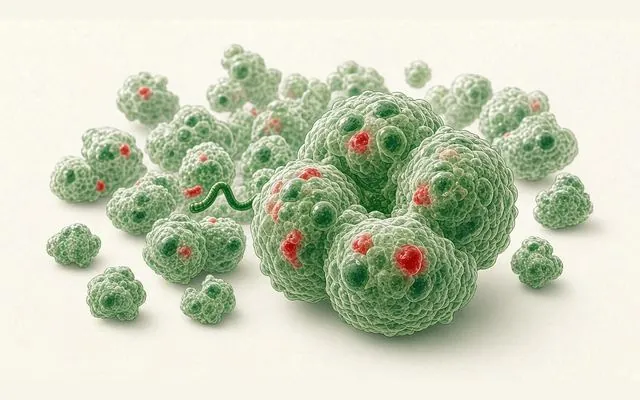
A 256-model tumour organoid biobank, with 162 genome-wide CRISPR screens completed
Clustered tumour organoids, with red dots marking dependency genes hit in CRISPR screens
One email, with links to every paper. Reports and custom landscapes: contact@inlightbio.com.
Opens your email app with a pre-filled request; we add you by hand. Free, unsubscribe any time.