PHERGain 5-year data: PET-guided chemotherapy de-escalation in HER2-positive early breast cancer
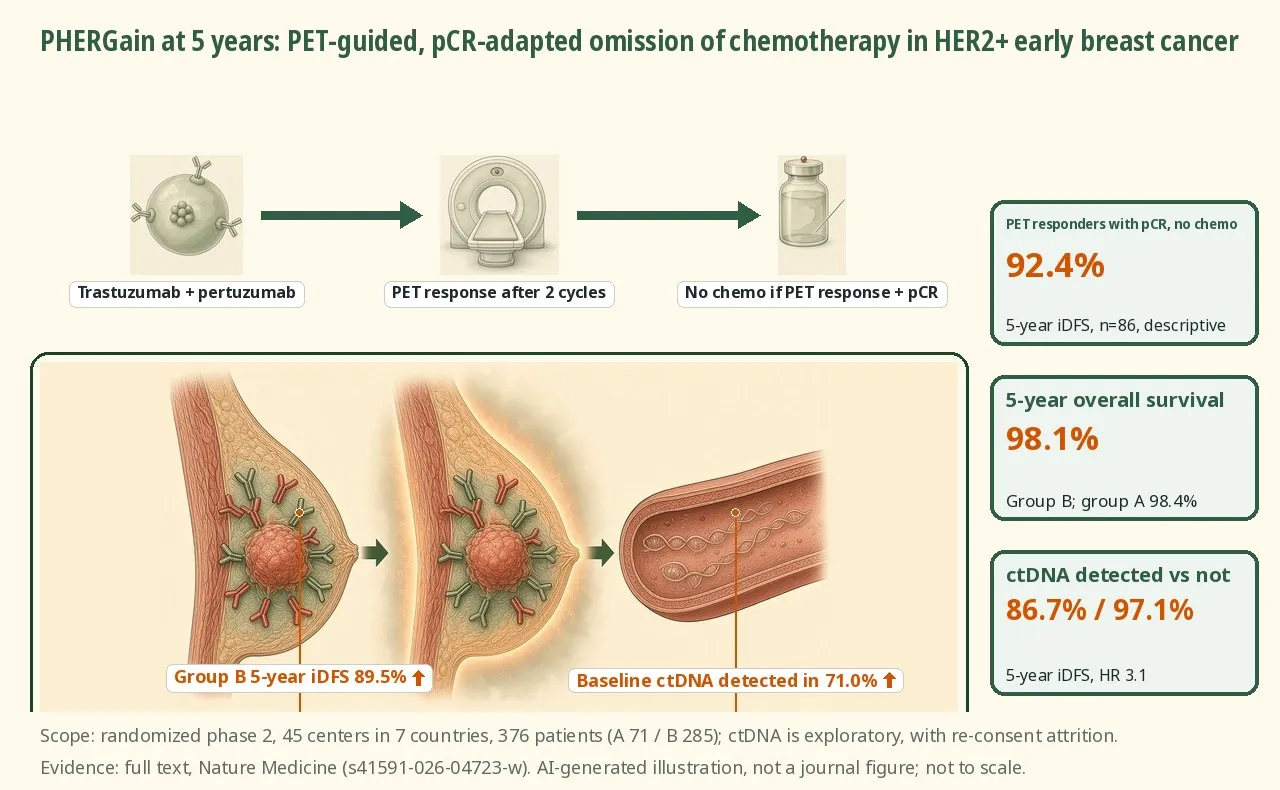
In the randomized phase 2 PHERGain trial (376 patients), patients in group B received trastuzumab and pertuzumab with PET assessment after two cycles; PET responders with pCR skipped chemotherapy. 5-year iDFS in group B was 89.5% (95% CI 85.7–93.4) at a median follow-up of 5.6 years, with exploratory ctDNA analyses.
Background and open questions
Most HER2-positive early breast cancers are treated with chemotherapy plus HER2-targeted antibodies. PHERGain tested whether early PET response can identify patients who can omit chemotherapy.
Study design
Patients were randomized to group A (docetaxel, carboplatin, trastuzumab, pertuzumab) or group B (trastuzumab and pertuzumab ± endocrine therapy) with PET after two cycles. PET responders in group B who achieved pCR at surgery did not receive chemotherapy. ClinicalTrials.gov: NCT03161353.
Key results
- Group B 5-year iDFS was 89.5% (95% CI 85.7–93.4) at a median follow-up of 5.6 years.
- Group A 5-year iDFS was 96.7% (95% CI 92.2–100) in its 63-patient surgery population.
- 5-year OS was 98.4% in group A and 98.1% in group B.
- Detectable ctDNA was associated with worse 5-year iDFS (86.7% vs 97.1%; HR 3.1, 95% CI 1.0–9.8; P = 0.021).
Mechanistic interpretation
PET response after two cycles may help pick patients for whom dual HER2 blockade alone is enough. ctDNA could add risk information but needs validation.
Limitations
- Phase 2 trial; the 5-year analysis is an extension phase that needed re-consent.
- ctDNA analyses are exploratory with wide confidence intervals.
Authors and source
Pérez-García JM, et al. Nature Medicine (open access, CC BY-NC-ND 4.0). Received 17 April 2026, accepted 23 September 2026, published online 29 October 2026. https://doi.org/10.1038/s41591-026-04723-w. ClinicalTrials.gov: NCT03161353.
Numbers are as reported by the authors. Corrections: contact@
Related science
First-in-class METTL1 inhibitor STM9005 cuts tRNA m7G and slows AML and solid-tumor models
STM9005 blocks METTL1–WDR4, lowering tRNA m7G and translation of oncogenic mRNAs.

MDT-BRIDGE: neoadjuvant durvalumab plus chemotherapy, then surgery or chemoradiotherapy by team decision
MDT-BRIDGE: neoadjuvant durvalumab plus chemotherapy, then MDT-guided surgery or chemoradiotherapy.
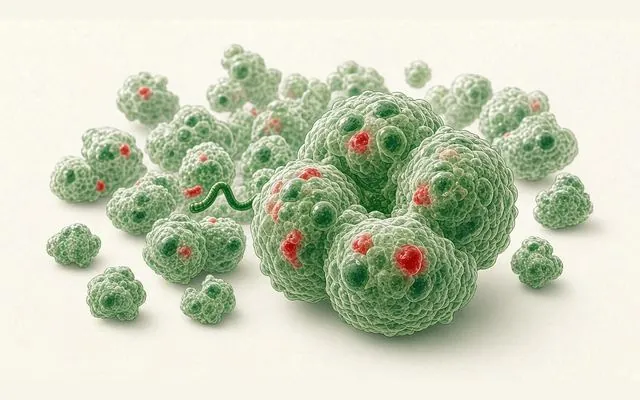
A 256-model tumour organoid biobank, with 162 genome-wide CRISPR screens completed
Clustered tumour organoids, with red dots marking dependency genes hit in CRISPR screens
One email, with links to every paper. Reports and custom landscapes: contact@inlightbio.com.
Opens your email app with a pre-filled request; we add you by hand. Free, unsubscribe any time.